
Find what matters to you.
Choose a topic to get started.
-
Understanding epilepsy
-
Seizure preparedness
-
Exploring treatments
-
Living with epilepsy
-
Preparing for adulthood
-
Learn by trying
-
Finding support and resources
Understanding Epilepsy
Knowledge starts here.
Learn about epilepsy, understand your seizures, and prepare questions for your healthcare team.
What to ask and write down
Understand epilepsy and what it means for you. Learning about epilepsy can help you take part in your care and know what questions to ask, whether epilepsy is new to you or has been part of your life for years.
Epilepsy affects the brain and can cause seizures again and again. Seizures do not all look the same. A person may shake, stare, or have trouble answering. Learn about the diagnosis so you can ask questions and explain care needs to others.
- Learn the names and what they mean
Ask the care team what type of seizures or epilepsy the person has. Ask what the tests show and what is still not known. Keep the names and test results with your care notes.
What do we know so far? What do we still need to find out? - Keep notes about what happened
After needed care is given, write what you or another person saw before, during, and after an event. Say who saw it. Write down the times you know. It is okay to write that a detail is not known.
What details would help the care team understand this event? - Make room for your questions
Bring a short question list to the next visit. Ask for words or pictures that make sense to you. You can ask someone to help listen or take notes. Find out who to contact with questions after the visit.
Can you explain that another way or show me what you mean?
As you get older, ask how your seizures, treatment, or care needs may change. Keep the people who help you informed and bring new questions to each visit.
SUDEP means sudden unexpected death in epilepsy. Ask your healthcare team about your own risk and ways to lower it. Take seizure medicines as prescribed, and discuss ongoing seizures and any concerns with your team.
Select a topic to explore
-
What is epilepsy?
Learn about epilepsy, how seizures can differ from person to person, and what questions to ask about diagnosis.
-
Understanding your seizures
Learn what to notice before, during, and after a seizure, and what to share with your healthcare team.
-
Epilepsy as you grow older
Explore how care, routines, and support needs may change throughout adolescence and adulthood.
-
Understanding SUDEP
Learn what sudden unexpected death in epilepsy means and prepare to discuss your individual risk with your healthcare team.
Learn the basics
-
Learn about epilepsy
Read about seizure types, causes, tests, and treatment. CNF's overview focuses on children and families.
-
Start with epilepsy basics
Learn what epilepsy is and why seizures can look different from person to person.
-
Know what to write in a seizure note
Find details to share about what happened before, during, and after a seizure. Give needed care first.
-
Understand SUDEP
Learn what SUDEP means and talk with your healthcare team about your own risk.
Try it out
Seizure Preparedness and Safety
Be ready wherever life takes you.
A new place or a change in your routine may mean it’s time to review your seizure action plan.
How to make and share a seizure plan
Be ready wherever life takes you. A seizure action plan helps the people around you know what to do when you have a seizure. As your activities, surroundings, and support change, review your plan with your healthcare team.
A seizure action plan tells people how to help during and after a seizure. It lists care steps and when to get help. Some people have rescue medicine for certain seizures. The plan says when and how to use it. Rescue medicine does not take the place of daily seizure medicine.
- Fill out a plan with the care team
Use CNF's seizure action plan with the care team. Include what the person's seizures look like, care steps, and emergency contacts. Review when to call your local emergency number. Use the school plan with the school nurse and care team when needed.
What should each helper do during a seizure and while the person recovers? - Check the rescue medicine steps
Ask if rescue medicine belongs in the plan. If it does, ask the team to show each helper when and how to use it, and what to do next. Check where it will be kept and who needs training.
Who will give the medicine, and who can help if that person is away? - Share the plan and ask about safety
Give the plan to the people who help at home, school, work, or in the community. Talk about safety in water, during sleep, and in daily life. Ask about SUDEP, or sudden unexpected death in epilepsy. It is rare. Ask what may lower this person's risk.
What has changed, and when should we review the plan again?
Review the plan when you start college, a job, or a day program; when helpers or living arrangements change; and whenever seizures or treatment change. Ask who can help, who needs training, who needs a copy, and when you will review it again.
When your life changes
-
Starting college or a new school
Find out who needs your plan in the new learning environment.
-
Working or volunteering
Think about the help you may need and what you want others to know.
-
Joining a day program
Ask about staff training, activities, and backup help.
-
Changes at home
Plan for new caregivers, respite providers, or living arrangements.
-
Spending time with friends
Think about how to share your needs with people you trust.
-
Exploring your community
Consider seizure preparedness during outings and travel.
Seizure care and safety
-
Learn about plans and rescue medicine
Read or watch CNF's introduction to seizure action plans and prescribed rescue medicine. Bring questions to the care team.
-
Learn seizure first aid
See steps for helping someone during and after a seizure, what to avoid, and when to call 911.
-
Talk about SUDEP with the care team
Find videos and handouts to help start a talk about SUDEP. Ask the care team which handout fits your needs.
-
Understand SUDEP and risk
Read what SUDEP means, what can affect risk, and questions to discuss with the care team.
-
Seizure Action Plan Coalition
Explore additional seizure planning resources for individuals and families.
My Seizure Action Plan
If the interactive tool is unavailable, use the blank CNF forms below and work with your healthcare team. Your current approved plan remains in effect.
Additional seizure planning tools
CNF Seizure Action Plan
Fill in this plan with the care team. Keep a copy where people who help with care can find it.
CNF School Seizure Action Plan
Work with the school nurse and care team on care steps, contacts, and who will help at school.
Try it out
Exploring Epilepsy Treatments
Be part of the conversation.
Explore treatment options and prepare for your next healthcare visit.
Questions to ask about treatment
Learn about your care and treatment. There are different ways to treat epilepsy. Learning about them can help you ask questions and take part in decisions about your care.
Treatment may include medicine, surgery, a device that treats seizures, or a special diet. Each person's needs are different. Ask what may help. What are the risks? How would it fit daily life?
- Bring the full picture
Bring a current medicine list. Add notes about seizures or possible side effects. Share what has changed. Talk about what matters to the person. This may include friends, school, work, rest, or help with daily care.
What do we want this treatment to help with, and how will we check? - Ask about each medicine
Ask what each medicine is for and how to use it. Ask what to do about a missed dose, side effects, or trouble getting refills. Get written steps and a contact for questions. Do not change or stop medicine on your own.
Which medicine is used each day? Is a separate rescue medicine part of the plan? - Talk about other choices
If seizures or side effects continue, ask about a doctor who focuses on epilepsy. Could surgery, a device, or a special diet help? Ask how each choice may help and what risks it has. A diet for seizures needs a care team to guide and check it.
What would this choice involve for the person and the people who help?
When you change schools, start work, move, or change care teams, check how you will get your medicines and refills. Ask who can help with your medicine routine, how to reach your pharmacy, and whom to call if you have questions. Keep following the instructions from your healthcare team.
Explore treatment topics
-
Seizure medicines
Ask about medicines, side effects, and daily routines.
-
Other treatment approaches
Explore surgery, devices, and medically supervised diets.
-
Managing treatment changes
Prepare for refills, pharmacies, and changes in the people who help with your care.
-
Questions for your care team
Prepare questions about your seizures, treatment goals, and daily life.
Questions about treatment
-
Explore treatment choices
Read CNF's overview of daily medicine, rescue medicine, surgery, devices, and special diets. Use it to prepare questions.
-
Learn about special diets for seizures
Read or watch how diet therapy may fit epilepsy care. These diets need a care team to guide and check them.
-
Learn about clinical trials
Clinical trials are research studies. Learn what to ask about risks, time, costs, and taking part in a child's study.
-
Know when to ask about an epilepsy specialist
Find treatment information and learn how an epilepsy center may help when seizures or side effects continue.
A guide to talk through together
Surgery for Difficult-to-Treat Epilepsy (2019)
Read the existing book about tests, treatment choices, and questions around epilepsy surgery. Discuss the information with the care team.
Try it out
Living with Epilepsy
Make room for what matters to you.
Epilepsy is one part of your life. Explore ways to take part in everyday activities with the support you need.

Small steps for daily life
Make room for the things that matter to you. Epilepsy is one part of your life. Explore ways to take part in everyday activities, build routines, and plan for the support you may need.
Epilepsy can affect school, work, friendships, and life at home. Your daily care can fit your needs and the help you use. Self-management means taking part in care in ways that work for you. That may include reminders, a tool, or help with every task.
- Choose one part of daily care
Pick one task, such as medicine, seizure notes, or a sleep routine. Match the plan to the person’s needs and how they learn. Choose who will help. Ask the care team what to do when the usual plan is hard to follow. - Plan for school or work
Ask the school nurse or school team about learning support and seizure care. At work, think about which tasks need support. Ask who can help with a request or a question about rights. The school and work links below are a place to start. - Make room for life in your community
Talk about friends, hobbies, work, day programs, and where you want to live. What help would make these plans work? Include rides and help at home. Ask your care team about safety for the activities you choose.
Friends and social life: Decide what you want others to know about epilepsy. Talk about the support you would like from someone you trust.
Day programs and community activities: Ask who is trained to follow your current plan and how staff will get updates. Plan rides and backup assistance.
Living arrangements and respite care: Talk through your routines and communication needs with new helpers. Make sure the people who need it can find the reviewed plan.
Emotional well-being: It is okay to ask for support for yourself or for someone who helps you. CNF can help you find resources.
-
Daily routines
Plan medicines, sleep, appointments, and support.
-
School and learning
Prepare for changes at school and talk with the people who help.
-
Friends and social life
Decide what you want to share with trusted people.
-
Work and volunteering
Explore support and accommodations.
-
Day programs
Prepare for new staff, activities, and backup help.
-
Living arrangements
Consider home, supported living, and caregiver changes.
-
Community life
Plan transportation, outings, and activities.
-
Emotional well-being
Find support for yourself and the people who help you.
Support for everyday life
-
Ideas for daily care
Read about medicine, seizure notes, sleep, feelings, and working with your care team.
-
Choose a way to keep seizure notes
Explore paper and digital options. The person with epilepsy or someone helping them can keep notes.
-
Plan for support at school
Find ideas for talking with the school team and helping staff learn about seizures.
-
Epilepsy and work rights in the U.S.
Read about asking for changes at work and sharing health information with an employer.
-
Find disability support near you in the U.S.
Use DIAL to look for local groups. Ask about daily support, devices, and taking part in community life.
Try it out
Build or review your seizure plan
Preparing for Adulthood (Lifespan Care)
Your future. Your path.
Adulthood looks different for everyone. Prepare for the changes that matter to you.
Steps to plan the move to adult care
Plan for your future, one step at a time. Preparing for adulthood can begin before you leave school, around age 12. Your healthcare, daily activities, living arrangements, and the people who help you may change. Transition planning should reflect your interests, abilities, and support needs.
Lifespan Care means planning for healthcare as a person grows and ages. Moving from child to adult healthcare is one part of that plan. Your goals, health needs, and ways of communicating help shape the plan. Caregiver help can continue in adult life.
- Start with what matters to the person
Start with the person’s goals and wishes. Use their words, signs, pictures, or device. A trusted person can help them take part. Ask the care team how support, privacy, and health decisions will work in adult care. - Keep care connected
Ask the current team when to look for adult care. Find out who will send records and handle refills during the change. Ask the new team about support needs. Plan the first visit and how to reach each team. - Plan for life after school
Talk with the school or support team about work or day activities, a place to live, rides, insurance, and daily help. Ask which services may change. Write down the next step and who will help with it.
Review your seizure action plan as healthcare providers, helpers, and daily activities change. Ask the current and new healthcare teams how to keep your instructions up to date, how to communicate your wishes, and who will help you get medicines and refills.
Explore the paths that fit your life.
-
College, work and new opportunities
Prepare for new healthcare providers, responsibilities, routines, and seizure preparedness.
-
Day programs and community life
Explore activities, transportation, services, and the people who will help you participate.
-
Home and ongoing care
Prepare for continued assistance, caregiver changes, and future care needs.
Getting ready for adult healthcare
-
Find your adult healthcare team
Ask your current team for help identifying adult care that fits your needs.
-
Prepare your medical records
Ask who will send your records and confirm they arrive.
-
Plan for medicines and refills
Ask who will manage refills while you move to adult care.
-
Review your seizure plan
Discuss changes to seizures, medicines, routines, or support with your healthcare team.
-
Communicate your needs
Share your preferences, communication needs, and the help you use.
-
Plan for ongoing support
Decide who will help you with care, daily routines, and new activities.
Moving to adult care
-
CNF Lifespan Care
Learn about planning for adult healthcare with support that fits the person’s needs.
-
See all CNF tools for moving to adult care
Find the full toolkit and forms for young people, caregivers, and care teams.
Bring these tools to your next visit
Transitions Checklist
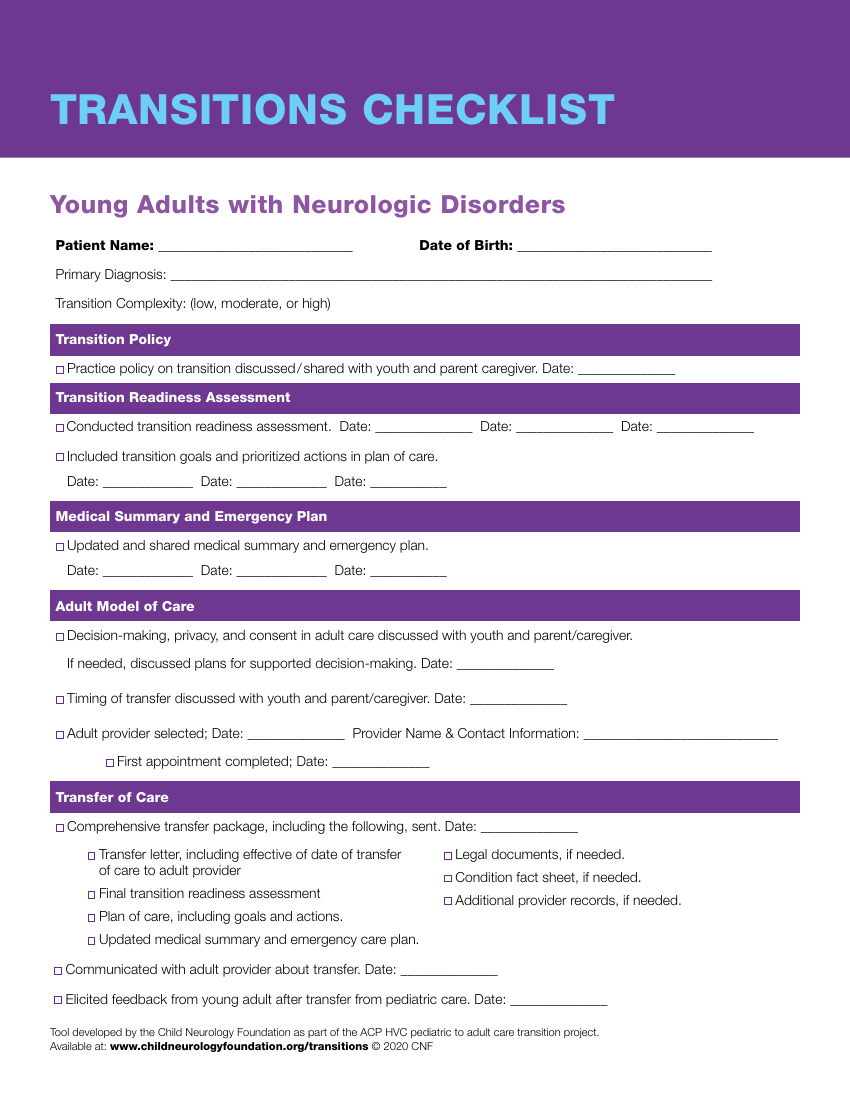
Use this list with the care team to track key steps before and after the move to adult care.
Medical Summary
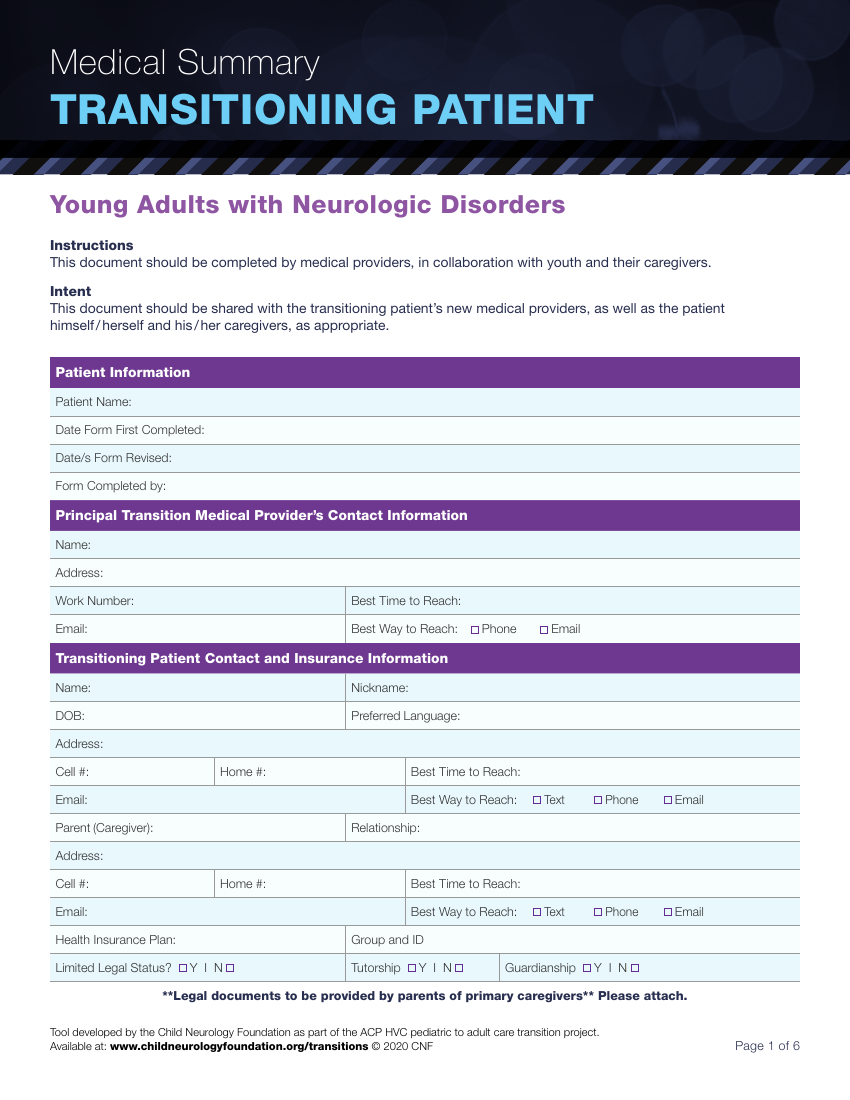
Ask the care team to fill this out with you. It holds health information and contacts for the new team.
Plan of Care
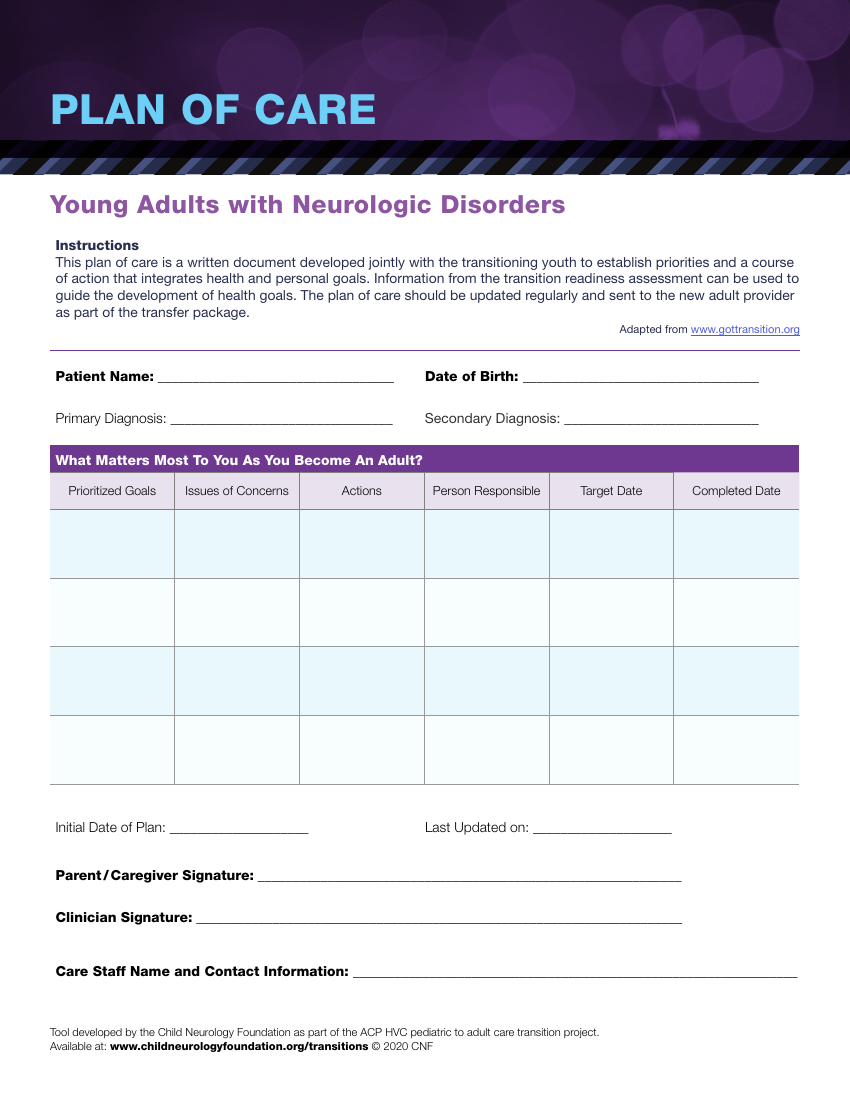
Write down goals, next steps, who will help, and when to check in. Build the plan together.
Try it out
Take part with the help you need
Interactive learning center
Learn by Trying
Try real-life situations, make choices, and discover new ways to prepare for life with epilepsy.
These stories are made up. For your own care, follow your care team’s instructions.
Try the activities and collect badges
-
Changes in adult care
5 activities. Plan visits, care, rides, and support as needs change.
-
Seizure preparedness
3 activities. Practice using, reviewing, and sharing a seizure plan.
-
Build daily routines
4 activities. Plan medicine help, seizure notes, sleep, and time with friends.
Changes in adult care
Support can continue as care and daily life change. Try any of these five situations.
Find an adult care team
Find an adult care team
Turn Avery’s care needs into questions for a new team.
What do the clinic listings tell us?
Screen 1 of 4
Avery and their parent need a new care team for adults. Avery has complex epilepsy and needs help to communicate. They found three clinics. Each listing leaves some questions.
Open the cards. What do we know? What do we still need to ask?
-
Northside Clinic 15 minutes from home. Takes requests for visits.
A short trip may help. But can this team meet Avery’s care needs? How can it help Avery communicate? A request for a visit still needs a reply.
-
River Clinic Has experience with complex epilepsy. 40 minutes from home.
Ask how that experience fits Avery’s needs. Ask how Avery can get help to communicate and how to join the clinic.
-
Park Clinic Offers more time for the first visit. Needs a referral: a care team’s request for care.
More time may help. Ask how Avery can get help to communicate. Can this team meet Avery’s care needs?
Choice notes
-
Before you choose
Choose a card, or show an example.
-
When more is needed
Check the choice notes, or show an example.
-
When the choices fit
Read the notes by your choices.
One example
Northside is closer. River has experience with complex epilepsy. Park offers more time. We still need to ask how each clinic can meet Avery’s needs.
Move through the activity
Build Avery’s question list
Screen 2 of 4
Avery wants to know how the clinic could meet their needs.
Choose a group
- Epilepsy care
- Help to communicate
- Joining the clinic
Match each question to a topic.
-
Have you cared for adults with needs like Avery’s?
This asks about care for people with needs like Avery’s. This asks about the care the team gives. Try Epilepsy care.
-
How can Avery get help to communicate at visits? How can their parent take part?
This asks how Avery can take part with the help they need. This asks about help during the visit. Try Help to communicate.
-
What referral and health records do you need to review Avery’s request for a visit?
This asks what the clinic needs before it can reply. This asks how to start care at this clinic. Try Joining the clinic.
Choice notes
-
Before you choose
Choose a card, or show an example.
-
When more is needed
Check the choice notes, or show an example.
-
When the choices fit
Read the notes by your choices.
One example
Can your team meet my care needs? How can I get help to communicate, and how can my parent take part? What do you need to review my request for a visit?
Move through the activity
Ask about the next step
Screen 3 of 4
River asks for a referral (a care team’s request for care) and recent health records. River will review them before agreeing to a visit. Avery’s family wants to ask their current care team for help.
Which message helps with the next step?
-
Can you confirm Avery will start care at River next month?
River has not yet agreed to provide care or booked a visit. First, ask about sending the information River needs.
-
Who will send the referral and records? How will we check that River got them?
This asks who will act and how to check. River still needs to review the request.
-
Could you send River a referral?
That is a start. Also ask about the health records and how to check that River got everything.
Choice notes
-
Before you choose
Choose a card, or show an example.
-
When more is needed
Check the choice notes, or show an example.
-
When the choices fit
Read the notes by your choices.
One example
River needs a referral and recent health records. Who will send them? How will we check that River got them? River still needs to review the request.
Move through the activity
Keep your questions handy
Screen 4 of 4
A clinic listing starts the search. Ask about care and the help the person needs. Travel, insurance coverage and visit times matter too.
Use this in your life
Ask the current care team for help finding adult care. Ask each new clinic how it can meet the person’s needs. Keep a list of questions that still need answers.
Helpful tools
Move through the activity
Stay in touch as care changes
Stay in touch as care changes
Keep track of what is ready and what still needs an answer.
What is ready for Alex’s new team?
Screen 1 of 4
Alex’s visit with the adult care team is in four weeks. Alex needs a medicine refill in ten days. The current team checked Alex’s medical summary. An older report was requested. We do not know if the adult clinic has it.
Choose three cards that show what is ready and what still needs an answer.
-
The team checked the medical summary. It includes the current medicine list and seizure action plan.
Keep this. The current team checked these details.
-
The older report was requested. We do not know if the adult clinic has it.
Keep this on the list. Asking for a report does not mean the clinic has it.
-
We have the office contact details. Alex needs a refill in ten days. Which care team will handle it?
Keep this. It shows who to contact, when Alex needs the refill and what to ask.
-
Use a medicine list from two years ago as Alex’s current list.
An old list can show past care. Use the list the team has checked for current medicines.
Choice notes
-
When the choices fit
This list shows what is ready and what still needs an answer.
-
When more is needed
Include the checked summary, the missing report answer and the refill question.
-
Before you choose
Choose cards for Alex’s list, or see the example.
-
When more is needed
Check the choice notes, or show an example.
One example
The medical summary is ready. We need to check if the clinic has the older report. Alex needs a refill in ten days. We need to ask which care team will handle it.
Move through the activity
Who can help answer?
Screen 2 of 4
Alex needs a refill in ten days. The adult visit is in four weeks. Alex needs to check records and find out who handles medicine refills.
Choose a group
- Current care team
- Adult clinic
- Pharmacy
Match each question to the place to start.
-
Who handles Alex’s prescriptions before the adult visit? How do we ask for the refill?
Start with the current team. Ask who handles refills and how to send the request. A new visit does not mean a new team handles prescriptions. Start with the Current care team.
-
Which records do you have? What is still missing for Alex’s visit?
The adult clinic can check which records it has and which it still needs. This asks which records the new clinic has. Try Adult clinic.
-
Are there any refills left on this prescription?
The pharmacy can check the prescription it has. That does not tell Alex which care team will write the next prescription. This asks about the prescription at the pharmacy. Try Pharmacy.
Choice notes
-
Before you choose
Choose a card, or show an example.
-
When more is needed
Check the choice notes, or show an example.
-
When the choices fit
Read the notes by your choices.
One example
Current care team: Who handles prescriptions? Adult clinic: Which records do you have? Pharmacy: Are any refills left?
Move through the activity
Say when the refill is needed
Screen 3 of 4
Alex needs the refill in ten days. The pharmacy says no approved refills are left. The adult clinic is not yet handling Alex’s prescriptions. The current office asks Alex to send its care team a request with the date the refill is needed.
Which message includes these facts?
-
I need my refill in ten days. The pharmacy has no refills left. The adult clinic is not yet handling my prescriptions. Who will handle this request? When should I check back?
This gives the date and the facts. It asks who will handle the request and when to check back.
-
Please renew my prescription before my adult visit next month.
Alex needs the refill sooner, in ten days. Add that timing and what the pharmacy and adult clinic said.
-
Send my refill request to the adult clinic because my visit is booked.
The adult clinic is not yet handling prescriptions. Send the request as the current office asked. Check who will handle it.
Choice notes
-
Before you choose
Choose a card, or show an example.
-
When more is needed
Check the choice notes, or show an example.
-
When the choices fit
Read the notes by your choices.
One example
Tell the current care team when the refill is needed and what each contact said. Ask who will handle the request and when to check back. The older report still needs a check too.
Move through the activity
Keep track of open questions
Screen 4 of 4
Alex’s list shows what is ready and what still needs a reply. Booking the adult visit is one step in the change of care.
Use this in your life
Use a summary to keep care details in one place. Check that the new clinic has the records. Ask which team handles prescriptions while care changes. Fill out CNF’s Medical Summary with the care team.
Helpful tools
Move through the activity
Take part with the help you need
Take part with the help you need
Explain how Devon wants to take part and keep getting help.
Tell the new office what helps
Screen 1 of 4
Devon uses a device to help share some answers. Their sister helps with long talks and next steps. Devon says, “Ask me first. Give me time to answer. I want my sister’s help too.”
Choose two cards that say how Devon wants the visit to work.
-
Please speak to me directly. Give me time to answer with my device.
This tells staff how to include Devon and give them time to answer.
-
My sister helps with long talks and next steps. I want her help to continue.
This tells staff what help Devon wants to keep.
-
My sister will do all the talking at this visit.
Devon wants their sister’s help. But Devon also wants staff to ask them first. Add both parts.
-
I use a communication device.
That helps staff know about Devon. Add time to answer and the help Devon wants from their sister.
Choice notes
-
When the choices fit
This says how to include Devon and the help they want.
-
When more is needed
Include both parts: how to speak with Devon and how their sister helps.
-
Before you choose
Choose cards for Devon’s message, or see the example.
-
When more is needed
Check the choice notes, or show an example.
One example
Please speak to me directly. Give me time to answer with my device. My sister helps with long talks and next steps. I want her help to continue.
Move through the activity
Ask how to share these wishes
Screen 2 of 4
Devon wants staff to know what helps before the visit. How can their sister get information and help after the visit?
Which question covers help during and after the visit?
-
Can you add my wishes to my chart? What steps let my sister get information and help me after visits, as I want?
This includes Devon’s wishes during and after visits. The office can explain any forms or steps.
-
Can you add a note that my sister is coming to the visit?
That tells staff she will come. Also explain how to speak with Devon and ask about help after the visit.
-
Can you send all future messages to my sister?
That asks about one way to get information. Also ask how Devon will be included and what steps the office needs.
Choice notes
-
Before you choose
Choose a card, or show an example.
-
When more is needed
Check the choice notes, or show an example.
-
When the choices fit
Read the notes by your choices.
One example
Can you add my wishes to my chart? What steps let my sister get information and help me after visits, as I want?
Move through the activity
When the help needs a new plan
Screen 3 of 4
Devon’s sister cannot come in person. Devon still wants her help with long talks. She could join by phone, but the office has not agreed yet.
Choose a next step. More than one choice can help.
-
Ask if my sister can join by phone and how to set that up.
This keeps Devon’s wishes in the plan. The office needs to agree and explain how she can join.
-
Ask if another visit time would work for my care and let my sister come.
This can help too. Ask the clinic if a new time would work for Devon’s care. Wait for the clinic to agree before changing the visit.
-
Send my sister’s notes. Keep all other plans the same.
Notes can help. But Devon wants help during long talks too. Ask how they can still get that help.
Choice notes
-
Before you choose
Choose a card, or show an example.
-
When more is needed
Check the choice notes, or show an example.
-
When the choices fit
Read the notes by your choices.
One example
My sister cannot come in person. I still want her help. Can she join by phone? If not, can we discuss another plan that works for my care?
Move through the activity
Your voice and your help both matter
Screen 4 of 4
Devon can take part and still get help. Their message explains how to include them, how their sister helps and what still needs a plan.
Use this in your life
Tell the office how you communicate and what help you want during and after visits. Ask how to set it up. CNF’s self-care forms can help people with epilepsy and the people who love and support them talk about help they need.
Helpful tools
Move through the activity
Get to the new visit
Get to the new visit
Find out what is arranged, what to ask and who can help.
What still needs a plan?
Screen 1 of 4
Taylor’s first visit with the adult care team is Tuesday at 10 a.m. Taylor needs a vehicle they can get into and use safely. Their usual driver cannot come. Taylor’s support person can attend, and the clinic has agreed they can join. The family has not checked insurance coverage.
Choose a group
- Confirmed
- Needs an answer
Sort the cards: Confirmed or Needs an answer.
-
Tuesday visit at 10 a.m.
The clinic has confirmed this time. Keep it on the plan.
-
A ride there and back in a vehicle Taylor can use
The usual driver cannot come. Neither trip has a new plan yet.
-
Insurance coverage for this visit
The family has not checked this. A booked visit does not tell us what insurance will pay.
-
Support person joining the visit
The support person can come. The clinic has agreed they can join.
Choice notes
-
When the choices fit
The visit time and support person are confirmed. The ride and insurance coverage still need answers.
-
When more is needed
Check the cards left. What has been confirmed?
-
When a choice needs another look
Read the note beside the card, then try again.
-
Before you choose
Choose a card, or show an example.
One example
Confirmed: Tuesday at 10 a.m.; support person joining. Needs an answer: a ride both ways in a vehicle Taylor can use; insurance coverage.
Move through the activity
Who can answer?
Screen 2 of 4
Taylor and their support person need answers from the clinic, health plan (insurance) and ride service.
Choose a group
- Health plan
- Ride service
- Clinic
Match each question to the place to start.
-
Will insurance cover this visit? Does it need approval? What might we pay?
Start with the health plan. Give the clinic name and visit details. The clinic can also help with billing questions.
-
Can you provide a vehicle Taylor can use for Tuesday’s 10 a.m. visit and the trip home? What pickup times can you offer for each trip?
Ask the ride service about the vehicle, both trips and how to book. The rides still need to be confirmed.
-
If we cannot get a ride, what other visit plans can we discuss?
Ask the clinic about other times or ways to have the visit. The clinic needs to check what is offered and fits Taylor’s care.
Choice notes
-
When the choices fit
Each question has a place to start. We still need the answers.
-
When more is needed
Match each question to a contact.
-
When a choice needs another look
Read what this contact can answer. Then try again.
-
Before you choose
Choose a card, or show an example.
One example
Health plan: insurance coverage and costs. Ride service: a vehicle Taylor can use and trips both ways. Clinic: other visit plans if a ride is not available.
Move through the activity
The ride is too late
Screen 3 of 4
The earliest ride pickup is 11:30 a.m. Taylor’s visit is still Tuesday at 10 a.m. The family has not checked insurance coverage.
Choose two next steps that could help.
-
Ask the clinic about a later visit before changing the time.
The clinic can check if it has a later time. It must agree before the visit time changes.
-
Ask the ride service about another time or another service.
Ask about other rides. Check that Taylor can use the vehicle and that both trips are available.
-
Book the 11:30 ride. Tell the clinic Taylor will be late.
Telling the clinic does not change the visit time. Ask if it can see Taylor later before booking that ride.
Choice notes
-
When the choices fit
These two questions can help. The visit stays at 10 a.m. unless the clinic agrees to a change. The ride and insurance coverage still need answers.
-
When more is needed
Choose one question for the clinic and one for the ride service.
-
When a choice needs another look
The clinic has not agreed to a later visit. Keep the 10 a.m. visit while you ask about other plans.
-
Before you choose
Choose a card, or show an example.
One example
Ask the clinic about a later visit. Ask the ride service about another time or service. The visit stays at 10 a.m. unless the clinic agrees to a change. Check rides both ways and insurance coverage.
Move through the activity
Keep a list of what to ask
Screen 4 of 4
Some parts of Taylor’s visit are set. Others still need answers. A next step can be a question and a contact who can help.
Use this in your life
Make these plans with the people who love and support you. You can ask CNF’s Connected Care Network for help finding support.
Helpful tools
Move through the activity
Plan for help after school
Plan for help after school
See which help will stay, what will change and what still needs a plan.
Look at Casey’s new week
Screen 1 of 4
Casey is moving from school to a community program. It meets on Monday, Wednesday and Friday. Casey uses a device to share answers and ideas. Casey needs help during group talks. Casey and aunt Jo are checking the new week.
Choose a group
- Stays the same
- New and confirmed
- Still needs a plan
Sort the cards: Stays the same, New and confirmed, or Still needs a plan.
-
Jo helps Casey plan each week. Jo has agreed to keep helping.
Jo will keep giving the same help.
-
The school office was the main contact. Pat has agreed to be the contact at the new program.
Pat is the new contact. That part is set.
-
A school aide helped Casey in group talks. The program has not said who will help.
Casey still needs help. The program has not confirmed who will give it.
-
School rides end. Rides to the new program are not yet planned.
Rides still need a plan. Keep this on the list.
Choice notes
-
When the choices fit
Some help is set. Help in group talks and rides still need a plan.
-
When more is needed
Sort each card, including the parts that still need a plan.
-
When a choice needs another look
Is this help set for the new week? Check what the card says.
-
Before you choose
Choose a card, or show an example.
One example
Stays the same: planning with Jo. New and confirmed: Pat is the program contact. Still needs a plan: help in group talks and rides.
Move through the activity
Write a message with Casey
Screen 2 of 4
Casey wants people to speak directly to them and give them time to answer. Jo is helping Casey write to Pat at the new program.
Choose two cards: one about Casey’s wishes and one about the help they need.
-
Please speak directly to Casey. Give them time to answer with their device.
This tells Pat how Casey wants people to speak with them.
-
Who will help Casey in group talks? Who will help if that person is away?
This asks about help Casey needs and a backup plan.
-
Casey had a school aide, so the same help will be here.
The school aide helped before. Ask Pat what help this program can provide.
Choice notes
-
When the choices fit
This message includes Casey’s wishes and asks about help.
-
When more is needed
Include how to speak with Casey and who will help in group talks.
-
When a choice needs another look
Ask Pat what help is available. We do not know yet.
-
Before you choose
Choose a card, or show an example.
One example
Please speak directly to Casey. Give them time to answer with their device. Who will help Casey in group talks? Who will help if that person is away?
Move through the activity
Update the week
Screen 3 of 4
Pat says Mara will help Casey in group talks. The program is still discussing who can help if Mara is away. Jo can give Casey a ride on Monday. Wednesday and Friday rides still need a plan.
Choose the three cards that match this update.
-
Mara will help in group talks. We still need to ask who can fill in.
Mara’s help is set. The backup plan is not.
-
Monday ride: Jo has agreed.
Jo has agreed to give Monday’s ride.
-
Wednesday and Friday rides: still need a plan.
Keep these rides on the list so Casey and their support people can ask for help.
-
All rides and help for the week are set.
Two rides still need a plan. We also need to know who can help if Mara is away.
Choice notes
-
When the choices fit
This shows what is set and what still needs a plan.
-
When more is needed
Include Mara’s help, the Monday ride and the rides still to plan.
-
When a choice needs another look
Check Pat’s reply and Jo’s offer. Some parts still need a plan.
-
Before you choose
Choose a card, or show an example.
One example
Monday ride: Jo. Wednesday and Friday rides: still need a plan. Help in group talks: Mara. Ask Pat who will help if Mara is away.
Move through the activity
Bring help into the new week
Screen 4 of 4
Casey still needs help as they leave school. The new plan shows what is set and what still needs an answer.
Use this in your life
Compare the old week with the new week. Ask who will help, when, and who can step in if plans change. Ask the program or CNF’s Connected Care Network about help that is missing.
Helpful tools
Move through the activity
Seizure preparedness
Practice using a seizure plan, planning for a new place, and helping a new support person understand the approved plan.
Use CNF’s seizure action plan
Use CNF’s seizure action plan
Find the care steps for after a seizure in CNF’s plan.
Find care steps for after a seizure
Screen 1 of 4
This is a made-up story for practice. Riley has had a seizure at an art group. Staff have followed Riley’s plan, including its emergency steps. Riley is awake and breathing as usual. Riley needs extra time to reply, as the plan describes. Staff keep following the full plan.
Keep these details in view
Practice story: Staff have followed Riley’s plan, including its emergency steps. This activity covers care after a seizure only.
Made-up example for practice: Riley
POST SEIZURE RECOVERY
Field: Other Specify
Stay with Riley. Ask one short question at a time. Give Riley extra time to reply. Offer the picture board. Use it if Riley chooses. Share these steps with the next staff member.
Where are Riley’s care steps for after a seizure?
-
POST SEIZURE RECOVERY
Recovery means getting better after a seizure. Find Riley’s recovery steps here.
-
DAILY TREATMENT PLAN
These are day-to-day treatment steps. Look for care after a seizure.
-
ABOUT
This tells us about Riley and their seizures. Look for care after a seizure.
Choice notes
-
When the choice fits
You found the recovery section. Next, read Riley’s practice entry.
-
When a choice needs another look
Look for care after a seizure. Or choose Show an example.
-
Before you choose
Choose a card, or show an example.
-
When more is needed
Check the choice notes, or show an example.
-
When the choices fit
Read the notes by your choices.
One example
Look in POST SEIZURE RECOVERY for Riley’s care steps.
Helpful tools
Move through the activity
Follow Riley’s plan
Screen 2 of 4
Read Riley’s made-up entry. Riley chooses a picture board to help them reply. A staff member stays with Riley.
Keep these details in view
Practice story: Staff have followed Riley’s plan, including its emergency steps. This activity covers care after a seizure only.
Made-up example for practice: Riley
POST SEIZURE RECOVERY
Field: Other Specify
Stay with Riley. Ask one short question at a time. Give Riley extra time to reply. Offer the picture board. Use it if Riley chooses. Share these steps with the next staff member.
Pick two cards that follow Riley’s plan.
-
Keep the picture board where Riley can use it.
Riley chose the board. Keep it close.
-
Ask one short question. Give Riley time to reply.
The plan says Riley needs extra time to reply.
-
Ask all the questions at once.
Ask one short question at a time. Then wait for Riley’s reply.
Choice notes
-
When the choices fit
Both choices follow Riley’s plan.
-
When more is needed
You found one step. Look for the other.
-
When a choice needs another look
Read Riley’s entry again. Which two cards match?
-
Before you choose
Choose a card, or show an example.
-
When more is needed
Check the choice notes, or show an example.
One example
Stay with Riley. Keep the chosen board close. Ask one short question, then wait.
Helpful tools
Move through the activity
Help the next staff member
Screen 3 of 4
A new staff member comes to stay with Riley. They have not read the plan. Riley still needs the same help.
Keep these details in view
Practice story: Staff have followed Riley’s plan, including its emergency steps. This activity covers care after a seizure only.
Made-up example for practice: Riley
POST SEIZURE RECOVERY
Field: Other Specify
Stay with Riley. Ask one short question at a time. Give Riley extra time to reply. Offer the picture board. Use it if Riley chooses. Share these steps with the next staff member.
What should you tell them?
-
“Let’s read Riley’s plan and recovery steps. Riley uses this board. Ask one short question, then wait. Can you take over staying with Riley?”
This shares Riley’s needs and asks the new staff member to take over.
-
“The seizure is over. Riley will probably join the group soon.”
We do not know when Riley will be ready. Share the care steps.
-
“Riley uses a picture board. The plan is in the folder.”
This leaves out care steps. Read the plan together.
Choice notes
-
Example reply after this choice
They read the plan together. The new staff member says, “I understand the care and emergency steps. I’ll stay with Riley, keep the board close and wait for replies.”
-
Before you choose
Choose a card, or show an example.
-
When more is needed
Check the choice notes, or show an example.
-
When the choices fit
Read the notes by your choices.
One example
The new staff member read the plan and agreed to take over.
Helpful tools
Move through the activity
Keep the full plan close
Screen 4 of 4
Keep the full plan close. Follow its care and emergency steps if things change.
Keep these details in view
Practice story: Staff have followed Riley’s plan, including its emergency steps. This activity covers care after a seizure only.
Made-up example for practice: Riley
POST SEIZURE RECOVERY
Field: Other Specify
Stay with Riley. Ask one short question at a time. Give Riley extra time to reply. Offer the picture board. Use it if Riley chooses. Share these steps with the next staff member.
Use this in your life
Riley’s story is made up. Fill in CNF’s blank plan with your care team. Share it with people who may need it.
Helpful tools
Move through the activity
A new place, a new plan
A new place, a new plan
Practice checking your seizure plan before starting something new.
Review before you go
Screen 1 of 4
Nora is 18 and will start a college training program next month. Nora has a current seizure action plan from school. The new program has a support office.
What is a good first step?
-
Use the old school plan without checking anything.
The new place may need different arrangements. Review the plan with the healthcare team.
-
Ask the healthcare team to review the current plan for the new program.
The medical instructions may stay the same, or the team may need to update them.
-
Write new rescue medicine directions alone.
Only the healthcare team should create or change medical instructions.
Choice notes
-
Before you choose
Choose one answer, or show an example.
-
When a choice needs another look
Read the note by your choice. You can try another answer or show an example.
-
When the choice fits
Read the note by your choice, then go to the next step.
One example
Nora can ask the healthcare team to review the current approved plan before starting the program.
Move through the activity
Find the right people
Screen 2 of 4
The support office can explain how the program supports students. Nora has not found out who is trained to help with seizures.
What should Nora ask?
-
Who can follow my reviewed plan, and who can help if that person is away?
This helps Nora confirm trained support and a backup.
-
Can I assume every staff member knows my care steps?
Ask who has the training instead of assuming.
-
Can I give my full medical record to everyone in class?
Share only the information needed with people who need it.
Choice notes
-
Before you choose
Choose one answer, or show an example.
-
When a choice needs another look
Read the note by your choice. You can try another answer or show an example.
-
When the choice fits
Read the note by your choice, then go to the next step.
One example
Ask who is trained to help, what the program needs on file, and how to reach backup help.
Move through the activity
Share the current plan
Screen 3 of 4
Nora's healthcare team has reviewed the plan. The support office has explained who can help and where the plan is kept.
What should Nora do next?
-
Keep the plan somewhere nobody can find it.
People who need to follow the plan must know how to find it.
-
Change the medicine steps to fit the class schedule.
Ask the healthcare team about scheduling questions. Do not change medical steps on your own.
-
Share the reviewed plan with the agreed people and check how they will get updates.
Make sure the right people can find the current version.
Choice notes
-
Before you choose
Choose one answer, or show an example.
-
When a choice needs another look
Read the note by your choice. You can try another answer or show an example.
-
When the choice fits
Read the note by your choice, then go to the next step.
One example
Nora shares the reviewed plan with the agreed support people and asks how to keep it up to date.
Move through the activity
What you can take with you
Screen 4 of 4
Think about one thing you would like to check or share in your own life.
What to remember
Before a new school, college, job, or program, review the current plan with your healthcare team. Confirm who can help, where the plan is kept, and how updates will be shared.
Explore these resources
Prepare your personalized seizure plan review draft
Seizure preparedness and safety
Move through the activity
Someone new is helping today
Someone new is helping today
Practice preparing for a new helper at home.
Get ready for the new helper
Screen 1 of 4
Jules uses a picture board to communicate. A new respite provider, Rae, is visiting tomorrow. Jules has a current healthcare-team-approved seizure action plan. Jules and a family member are getting ready.
What should they do before the visit?
-
Assume Rae knows Jules's plan because Rae has helped other people.
Each person's plan is different. Confirm the details.
-
Review the current approved plan together and confirm Rae has the training needed to follow it.
Ask the healthcare team or agency to help confirm training and arrangements.
-
Ask Rae to make up new medical instructions.
The healthcare team must review any changes to medical instructions.
Choice notes
-
Before you choose
Choose one answer, or show an example.
-
When a choice needs another look
Read the note by your choice. You can try another answer or show an example.
-
When the choice fits
Read the note by your choice, then go to the next step.
One example
Confirm Rae can follow the current plan and knows how Jules communicates.
Move through the activity
Show where the plan is
Screen 2 of 4
Rae has arrived. The family has confirmed that Rae has the needed training. Jules wants to show Rae where the reviewed plan and picture board are kept.
What should they share?
-
The reviewed plan, how Jules communicates, and the agreed contact and backup arrangements.
These are useful details for the person providing care.
-
Only the name of Jules's epilepsy diagnosis.
The helper needs individual care instructions and communication details.
-
Private information that has nothing to do with care.
Share only the information needed to provide support.
Choice notes
-
Before you choose
Choose one answer, or show an example.
-
When a choice needs another look
Read the note by your choice. You can try another answer or show an example.
-
When the choice fits
Read the note by your choice, then go to the next step.
One example
Show Rae the current approved plan and Jules's communication tools. Check that Rae knows the agreed contacts.
Move through the activity
Plan for backup
Screen 3 of 4
Rae tells the family that another staff member may cover next week. No one has confirmed the backup person's training.
What is the next step?
-
Assume the new person will be trained.
Check first so the necessary arrangements are in place.
-
Replace the approved plan with a shorter made-up version.
Do not change medical instructions. Ask the team if the plan needs updating.
-
Contact the agency and care team to confirm the backup can follow the current plan before the visit.
Do not assume someone is ready to help until the arrangements are confirmed.
Choice notes
-
Before you choose
Choose one answer, or show an example.
-
When a choice needs another look
Read the note by your choice. You can try another answer or show an example.
-
When the choice fits
Read the note by your choice, then go to the next step.
One example
Confirm the backup arrangements and make sure the backup helper can access the current reviewed plan.
Move through the activity
What you can take with you
Screen 4 of 4
Think about one thing you would like to check or share in your own life.
What to remember
When someone new helps with care, involve the person with epilepsy, review the approved seizure action plan, confirm training, and agree on backup support.
Explore these resources
Prepare your personalized seizure plan review draft
Seizure preparedness and safety
Move through the activity
Build daily routines
Try ways to plan medicine help, write seizure notes, make time to rest, and share needs with friends.
Plan help with medicine
Plan help with medicine
Choose a reminder and agreed help. Keep Jordan’s medicine instructions the same.
Who will help on weekdays?
Screen 1 of 4
Jordan needs help with medicine. Lee has agreed to help on weekdays. Robin helps on weekends. Both know the written steps. Jordan likes phone or paper reminders. Keep the medicine instructions the same.
Choose one from each group
- Reminder
- Helper
Pick one reminder and one weekday helper.
-
A quiet phone reminder at the set medicine times.
Jordan likes this. A reminder does not show if medicine was taken.
-
A paper note with the set medicine times.
Jordan likes this too. Keep the note in sight.
-
Lee, who agreed to help on weekdays.
Lee said yes. Either reminder works with Lee’s help.
-
Whoever sees or hears the reminder.
No one has agreed. Pick someone who said yes.
Choice notes
-
When the choices fit
Jordan has a reminder and agreed help.
-
When more is needed
Pick a reminder and an agreed helper. Jordan needs both.
-
Before you choose
Choose a card, or show an example.
One example
Either reminder works with Lee’s help. Both follow the current medicine instructions.
Move through the activity
Get ready for the next helper
Screen 2 of 4
It is Friday. Jordan and the helpers share written notes. Robin agreed to help on Saturday. Lee needs to share the latest notes.
Pick two things that will help Robin.
-
Robin will help on Saturday. Ask Lee about Friday’s notes.
This names the helper and who can answer questions.
-
Share the medicine instructions and notes on what was done.
Robin needs both. Write only what is known.
-
The reminder went off. Mark the medicine as taken.
A reminder does not show if Jordan took medicine. Write only what is known.
-
Send a group message. Someone will help.
A group message is not an agreement. Ask the helper to say yes.
Choice notes
-
When the choices fit
Robin has agreed and has the needed information.
-
When more is needed
Choose the agreed helper and the instructions with notes.
-
Before you choose
Choose a card, or show an example.
One example
Robin will help on Saturday. Share the instructions and notes. Ask Lee about Friday.
Move through the activity
The helper cannot come
Screen 3 of 4
Robin cannot help on Saturday. Dev is an agreed backup helper who knows the routine. Dev has not said if Saturday works.
What should happen next?
-
Ask Dev about Saturday. If Dev says yes, tell Jordan and update the notes.
Dev says yes in this story. Tell the other helpers too.
-
Put Dev’s name on the list. Send it to everyone.
Dev has not said yes. Ask before counting on the help.
-
Keep the reminder and helper’s name as they are.
Robin cannot come. Jordan still needs someone who agreed to help.
Choice notes
-
Before you choose
Choose a card, or show an example.
-
When more is needed
Check the choice notes, or show an example.
-
When the choices fit
Read the notes by your choices.
One example
Dev agreed to help. Jordan and the helpers have the new notes. The medicine instructions stay the same.
Move through the activity
Ongoing help can be part of the routine
Screen 4 of 4
Reminders, agreed help and shared notes can work together.
Use this in your life
Ask, “Who will help? What if that changes?” Ask the care team if the medicine instructions are not clear.
Helpful tools
Move through the activity
Write down what happened
Write down what happened
Write what someone saw, what others said and what is not known.
How do we know?
Screen 1 of 4
Staff followed Morgan’s care plan. The care needed right away is complete. Now Maya is writing a note. She noticed Morgan holding a marker still and not answering. No one saw when it began.
Choose a group
- Maya saw it
- Someone said it
- Not known
For each card, pick: Maya saw it, Someone said it, or Not known.
-
Morgan held the marker still and did not answer Maya.
Maya saw this herself. Keep it in the note.
-
Noor says Morgan was choosing colors before this.
Noor said this. Write who said it.
-
Morgan said, “My head hurts.”
This is how Morgan said they felt. Keep their words.
-
The exact time the change began.
No one saw the start. Write “not known.”
Choice notes
-
When the choices fit
All these details can help. Show how each is known.
-
When more is needed
Who saw or said it? No one knows the exact start.
-
Before you choose
Choose a card, or show an example.
One example
Maya saw it: still marker, no reply.
Someone said it: Noor’s report and Morgan’s own words.
Not known: the exact start.
Move through the activity
Add the times you know
Screen 2 of 4
Maya first noticed the change at 2:14 p.m. Morgan answered at 2:16 p.m. Maya did not see the exact start or end.
Which note should Maya add?
-
First noticed: 2:14 p.m. Morgan answered: 2:16 p.m. Exact start, end and how long it lasted: not known.
Keep what Maya saw and heard. Do not guess how long it lasted.
-
A seizure began at 2:14 p.m. and lasted two minutes.
Maya cannot say it lasted two minutes or that it was a seizure.
-
We do not know how long it lasted. Leave out both times.
Keep both times. Say what Maya saw or heard at each one.
Choice notes
-
Before you choose
Choose a card, or show an example.
-
When more is needed
Check the choice notes, or show an example.
-
When the choices fit
Read the notes by your choices.
One example
First noticed: 2:14 p.m.
Morgan answered: 2:16 p.m.
Exact start, end and how long it lasted: not known.
Move through the activity
What do we know about the place?
Screen 3 of 4
This was Morgan’s first visit to the craft group. A friend thinks the new place caused the change. No one knows if that is true.
What should the note say?
-
Morgan’s first visit. Cause not known.
This names the place without guessing at a cause.
-
The new craft group caused a seizure.
We do not know the cause or if this was a seizure.
Choice notes
-
Before you choose
Choose a card, or show an example.
-
When more is needed
Check the choice notes, or show an example.
-
When the choices fit
Read the notes by your choices.
One example
Place: craft group. Morgan’s first visit.
2:14 p.m.: Maya noticed Morgan holding a marker still and not answering.
Noor says Morgan was choosing colors before this.
2:16 p.m.: Maya heard Morgan answer.
Morgan later said, “My head hurts.”
Exact start and end: not known.
How long it lasted: not known.
Cause: not known.
Staff followed Morgan’s plan and finished the care needed right away.
Move through the activity
You can write “not known”
Screen 4 of 4
Write what people saw or said. Say who saw or said it. Mark what is not known.
Use this in your life
Use a diary or record chosen with the care team. If the person needs care, help them first.
Helpful tools
Move through the activity
Make time to wind down
Make time to wind down
Fit evening tasks around Sam’s plans and the help Sam needs.
What can move?
Screen 1 of 4
These times are just for Sam’s story. Sam wants quiet time after a call and before bed.
Call: 7:30 to 7:50 p.m.
Asha can help: 7 to 8 p.m.
Care: 20 minutes with Asha.
Packing: 10 minutes with Asha.
Both tasks can come before the call.
Choose a group
- Set time
- Can move and needs help
- Can move with no help
For each card, pick: Set time, Can move and needs help, or Can move with no help.
-
Call with a friend, 7:30 to 7:50 p.m.
Sam and the friend agreed on this time.
-
Care, 20 minutes with Asha.
The time can move. Sam still needs Asha’s help.
-
Pack tomorrow’s bag, 10 minutes with Asha.
Packing can move. A helper must be there.
-
Quiet time after the call, without help.
Sam can choose a quiet time after the call without help.
Choice notes
-
When the choices fit
The call is set. Other tasks can move. Care and packing still need help.
-
When more is needed
Care and packing can move. Both still need help.
-
Before you choose
Choose a card, or show an example.
One example
Set time: call.
Can move and needs help: care, packing.
Can move with no help: quiet time after the call.
Move through the activity
Choose a plan that fits
Screen 2 of 4
Asha can help with care and packing from 7 to 8 p.m. Either task can come first. All times below are in the evening.
Sam’s times
Call: 7:30 to 7:50 p.m.
Asha can help: 7 to 8 p.m.
Care: 20 minutes with Asha.
Packing: 10 minutes with Asha.
Both tasks can come before the call.
Try a plan. More than one works.
-
7:00 to 7:20: Care. 7:20 to 7:30: Pack. 7:30: Call. Then: Quiet time.
This fits. Asha helps with both tasks. Sam is ready for the call.
-
7:00 to 7:10: Pack. 7:10 to 7:30: Care. 7:30: Call. Then: Quiet time.
This fits too. Sam has help with both tasks.
-
7:30: Call. 7:50 to 8:10: Care. 8:10 to 8:20: Pack. Then: Quiet time.
Asha leaves at 8:00. Move the tasks or find someone who agrees to help.
Choice notes
-
Before you choose
Choose a card, or show an example.
-
When more is needed
Check the choice notes, or show an example.
-
When the choices fit
Read the notes by your choices.
One example
Care then packing works. Packing then care works too. Both finish by 7:30 with help.
Move through the activity
The help changes
Screen 3 of 4
Tomorrow, Asha can help from 7:00 to 7:20 p.m. Sam’s sister agreed to help pack at 6:45 p.m. She cannot help with care. The call stays at 7:30 to 7:50 p.m.
Sam’s times
Tomorrow, Asha can help from 7:00 to 7:20 p.m.
Sam’s sister agreed to help pack at 6:45 p.m.
She cannot help with care.
The call stays at 7:30 to 7:50 p.m.
Care, 20 minutes.
Pack tomorrow’s bag, 10 minutes.
Which plan fits tomorrow’s help?
-
6:45: Pack with Sam’s sister. 7:00 to 7:20: Care with Asha. 7:30: Keep the call.
Each task has agreed help. Sam still has the call and quiet time.
-
7:00 to 7:30: Pack and do care with Asha.
Both tasks take 30 minutes. Asha has 20 minutes. Pack earlier with Sam’s sister.
-
Move the call. Keep both tasks with Asha after 7:00.
Asha still leaves at 7:20. Moving the call does not add time with help.
Choice notes
-
Before you choose
Choose a card, or show an example.
-
When more is needed
Check the choice notes, or show an example.
-
When the choices fit
Read the notes by your choices.
One example
6:45: Pack with Sam’s sister.
7:00 to 7:20: Care with Asha.
7:30 to 7:50: Call.
Then: Quiet time.
Move through the activity
Plan time for rest and help
Screen 4 of 4
Sam kept needed help, the call and quiet time in the plan.
Use this in your life
Your times can differ. Ask, “What can move? Who can help?” Ongoing help can be part of the routine. Tell the care team if sleep problems keep happening.
Helpful tools
Move through the activity
Making plans with friends
Making plans with friends
Practice sharing support needs while respecting someone's choices.
Decide what to share
Screen 1 of 4
Emery wants to attend a friend's game night. Emery has epilepsy and a current approved seizure action plan. Emery wants a trusted friend to know how to help.
How can Emery prepare?
-
Post all medical records in the group chat.
Share only needed information with trusted people.
-
Assume everyone at the game night knows how to help.
Confirm what support is needed before the activity.
-
Decide with a trusted supporter what information the friend needs and how to ask for help.
Respect Emery's choices and discuss seizure safety with the healthcare team.
Choice notes
-
Before you choose
Choose one answer, or show an example.
-
When a choice needs another look
Read the note by your choice. You can try another answer or show an example.
-
When the choice fits
Read the note by your choice, then go to the next step.
One example
Emery can choose a trusted person to talk with and decide what information is needed for safe support.
Move through the activity
Confirm the support
Screen 2 of 4
Emery has talked with the healthcare team and knows what support is needed. The trusted friend says they are happy to help but have not reviewed the plan or received any needed training.
What could Emery do?
-
Check the plan with the healthcare team and confirm the needed support and training are in place.
Make sure the arrangements match Emery's individual care needs.
-
Ask the friend to guess what to do during a seizure.
A helper should have approved instructions, not guesses.
-
Cancel every future social activity because Emery has epilepsy.
Discuss the support and safety arrangements for activities Emery wants to do.
Choice notes
-
Before you choose
Choose one answer, or show an example.
-
When a choice needs another look
Read the note by your choice. You can try another answer or show an example.
-
When the choice fits
Read the note by your choice, then go to the next step.
One example
Confirm appropriate support before the activity, using the current approved plan and advice from the healthcare team.
Move through the activity
When plans change
Screen 3 of 4
The friend texts that game night has moved to a different place. Emery is not sure whether the agreed support is still available.
What should Emery check?
-
Assume everything will be the same.
Confirm the arrangements rather than guessing.
-
Ask whether support, transportation, and plan access will still work at the new place.
A change of place can change the arrangements. Check what is needed.
-
Change medicine instructions to fit the new place.
Only the healthcare team should change medical instructions.
Choice notes
-
Before you choose
Choose one answer, or show an example.
-
When a choice needs another look
Read the note by your choice. You can try another answer or show an example.
-
When the choice fits
Read the note by your choice, then go to the next step.
One example
Check the agreed support and transportation at the new location. Ask the healthcare team about unresolved care or safety questions.
Move through the activity
What you can take with you
Screen 4 of 4
Think about one thing you would like to check or share in your own life.
What to remember
People with epilepsy can take part in the activities that matter to them. Plan with the person, respect what they want to share, and confirm individual support and safety arrangements.
Explore these resources
Prepare your personalized seizure plan review draft
Seizure preparedness and safety
Move through the activity
Finding Support and Resources
You can ask for help.
Connect with CNF’s Connected Care Network for free, personalized support.
Connect with the Connected Care Network
How to find the right support
You can ask for help. Whether you have questions about epilepsy, are preparing for a change in care, or need help finding services, you don't have to figure everything out on your own. Through CNF's Connected Care Network, individuals and families can receive free, personalized support and help finding resources.
Help can mean a person to talk with, an answer to a question, or a service near home. Start with the need that matters most today. These resources are for people with epilepsy and the people who love and support them. You can use the links without doing an activity.
- Name one need
What would help most right now? It may be a school question, help with insurance or rides, food or housing, or someone to talk with. Start there. - Ask what the service offers
Ask who can use the service, whether it costs money, and if there is a wait. Ask for the language or communication help you need. Services can differ by place. - Choose a next step
Write down who you spoke with, what to do next, and who can help. If the first option does not fit, ask about another resource.
People and services that can help
Talk with CNF
-
CNF Connected Care Network
Tell CNF what is happening and what kind of help you need. The team offers free, confidential emotional support and help finding resources. Staff do not give medical advice.
Epilepsy questions and local groups
-
Epilepsy Foundation help
Find help with epilepsy questions and local resources. The page also lists places to look for help outside the U.S. Check the page for ways to get in touch.
Feelings and caregiver support
-
Support for feelings and caregiving
Hear from families and experts about feelings, stress, and caring for yourself.
-
Courses for caregivers
Learn about CNF caregiver courses and check for new dates. Course sign-up is separate from this resource center.
Local services in the U.S.
-
Find disability support near you in the U.S.
Use DIAL to look for local groups. Ask about daily support, devices, and taking part in community life.
-
Find help with food, housing, and other needs
Find your local 211 to ask about services near you. Each program has its own rules and available help.
More CNF resources
-
Roadmap to Resources
Explore CNF's guide to organizations, programs, and resources serving the child neurology community.
Try it out
Take part with the help you need
Using this center
Is this center free?
Yes. The educational information, interactive activities, and planning tools in this center are free to use.
Who can use this resource center?
People living with epilepsy, parents, caregivers, and anyone who helps support them can use these resources.
Can I use the seizure planning tool if I already have a plan?
Yes. It can help you think about changes in your life and identify information you may want to review with your healthcare team. Keep using your current approved plan until your healthcare team updates it.
What should I know about my information?
Only include information needed to prepare your review draft. Do not enter Social Security numbers, insurance identification numbers, passwords, financial information, or unnecessary personal details. Keep printed or saved copies secure, and share them only with people who need them.
Can someone help me use the activities?
Yes. You can try them on your own or with someone you trust. Take the time you need. You can read an example or go back to a choice.
Do I need to finish every activity?
No. Choose any activity that interests you. You can stop, start again, or use the resources at any time.
Can the activities tell me what care I need?
These stories help you learn and practice. Your care team can answer questions about your own care and the steps in your plan.
This Family Resource Center is sponsored by
