
Who can apply
First-, second-, and third-year U.S. and Canadian medical students interested in training in neurodevelopmental disabilities or child neurology can apply.
The project must focus on neurodevelopmental disabilities in children or young adults and take place during summer break under the direction of a subspecialist in child neurology or neurodevelopmental disabilities.
NDD Scholars
Select a scholar to explore their research and career goals.
2026
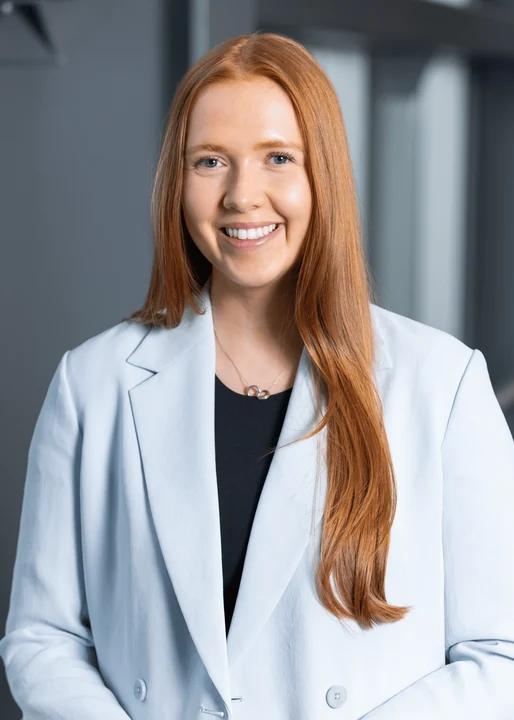
Paulina Hart
-
School
University of Alberta
-
Mentor
Adam Kirton, MD, MSc, FRCPC
-
Research proposal
Club BCI: A Program for Pediatric Brain-Computer Interface Users
Career goals
It is an incredible honour to be the recipient of the 2026 Child Neurology Foundation Neurodevelopmental Disabilities Summer Research Scholarship. As a medical student at the University of Alberta, it is a privilege to pursue summer research under the mentorship of Dr. Adam Kirton and the BCI4Kids Clinical Research Team at the Alberta Children’s Hospital. My passion for pediatric medicine and neurodevelopmental disabilities was ignited during my Master’s degree, when I studied neuroimaging and interacted closely with children affected by perinatal stroke and cerebral palsy. Additionally, being introduced to neurotechnology in this space was entirely transformative; observing how children with severe neurological disabilities can control a computer using only their thoughts through brain-computer interface (BCI) technology fundamentally shifted my perspective. BCI empowers these children to achieve greater independence, unlock new avenues for participation in life, and truly make the impossible possible. Witnessing this firsthand instilled in me a deep commitment to breaking down barriers of access, independence, and participation that children with severe physical disabilities face. In my career as a doctor, my goal is to provide patient- and family-centered care and advocate for all patients. I strive to be active in connecting clinical care, research, and community engagement in pediatric medicine.
2025
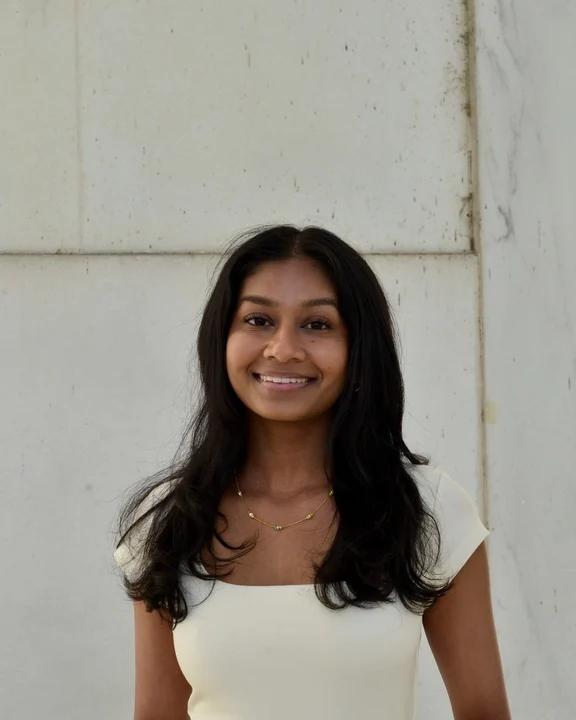
Malavika Mahendran
-
School
The George Washington University
-
Mentor
Sarah B. Mulkey, MD, PhD
-
Research proposal
Early Childhood Neurodevelopmental Outcomes Following Antenatal SARS-CoV-2 Exposure
Career goals
I have had a longstanding interest in the developing brain and the interplay of factors influencing development across the lifespan. In my future career, I am committed to the practice of community-engaged research and collaborative, interdisciplinary care that centers the needs and experiences of patients and caregivers. I am so grateful to work with my mentor, Dr. Sarah B. Mulkey, and her exceptional team at Children’s National Hospital on their study investigating the long-term neurodevelopmental outcomes associated with maternal SARS-CoV-2 infection. This research will deepen our understanding of factors affecting neurodevelopment and inform guidelines for targeted follow-up and therapy. Thank you to the Child Neurology Foundation for this incredible opportunity to explore my interests in child neurodevelopment and neurodevelopmental disabilities!
Earlier scholars
2024
Lamia Zuberi
-
School
Baylor College of Medicine, Texas Children’s Hospital
-
Mentor
Davut Pehlivan, MD
-
Research proposal
Delving into the Interplay of Genotype and Longitudinal Phenotype in MECP2 Duplication Syndrome through Deep Phenotyping and Comprehensive Genotyping
Career goals
What makes the world of medicine so beautiful is that it is an art that is dynamically undergoing metamorphosis at the hands of its artists. This notion has been exemplified throughout history, but the most precious practice that has persisted through time is that the interest and well being of patients should be the center of care. This is especially crucial when considering a pediatric population that is often unable to advocate for themselves. Through the realms of Child Neurology and Neurodevelopmental Disabilities, I aspire to wholeheartedly be a champion of children’s health and wellness as a physician, and it would be the greatest honor and privilege to be entrusted to do so. I would love to utilize the clinical prowess that I attain and work synergistically with other healthcare disciplines to make a long lasting impact in the area of abusive head trauma (AHT). As a future physician and especially as a human being, I firmly believe that every child deserves to be nurtured and given the chance to be an artist painting their mark on this world. This is precisely why it is my goal to help decrease the prevalence of abusive head trauma and its long term neurodevelopmental effects through improving preventative measures, screening practices, and treatment options.
2023
Erin Hendry
-
School
University of Rochester School of Medicine and Dentistry
-
Mentor
Jennifer Vermilion, MD
-
Research proposal
Anxiety Phenotype and Functional Impact in Youth with Chronic Tic Disorders
Research and career goals
This summer, with the support of the Child Neurology Foundation’s Neurodevelopmental Disabilities Summer Research Scholarship, I worked under the mentorship of Dr. Jennifer Vermilion on a project examining anxiety in youths with Chronic Tic Disorders (CTDs). The project, Anxiety Phenotype and Functional Impact in Youth with Chronic Tic Disorders, aims to develop a better understanding of the phenotype of anxiety in youths with CTDs such as Tourette’s Syndrome. To further the goals of the project, I participated in screening phone calls, consent visits, and aided in data analysis.
When conducting screening calls and consent visits, I worked with Nicole Walsh, NP, in developing quality phone communication with potential study participants about the study and what the expectations of participants were. I had the opportunity to reach out to several potential participants about the study throughout the summer to discuss the study and assent interested participants. This experience allowed me to become more comfortable with communicating with and assenting participants in child neurology research, a main goal of my summer.
In addition to communicating with participants and their caregivers, I examined and evaluated our participants’ responses to either the Short Sensory Profile or the Sensory Profile 2. The Short Sensory Profile and Sensory Profile 2 are a sensory processing questionnaire administered to individuals ages 11 to 17 or the caregivers of children ages 4 to 11, respectively. The two sensory assessments incorporate neurological and behavioral tendencies to help determine the sensory profile of children based on four domains: registration, sensation seeking, sensory sensitivity, and sensory avoidance.
For my project, I helped code the participants’ responses to first determine how many of the participants had abnormal sensory profiles across the four domains tested in the two questionnaires. I then completed several statistical analyses on the data to determine if there were any significant relationships between the presence of abnormal sensory profiles and comorbidities such as obsessive-compulsive disorder (OCD) and attention-deficit/hyperactivity disorder (ADHD). I also looked at the relationship between the sensory profile of the participants and their Premonitory Urges for Tic Disorders Scale (PUTS) and their Yale Global Tic Severity Scale (YUGTSS) to determine if there were any relationships between the sensory profile of the participants and the severity of their premonitory urge and overall tic severity. This analysis helped me become more comfortable working with larger data sets, statistical programs such as R, and introduced me to a range of statistical tests such as multivariate linear regressions. Overall, the research improved my research critical thinking skills which will be instrumental in having a career as a child neurologist interested in conducting clinical research.
In addition to gaining skills in assenting young participants and improving my data analysis skills, a highlight of my summer was having the opportunity to work with Dr. Vermilion. As part of her research team, I was able to meet children with a variety of neurological movement disorders such as Tourette Syndrome, cerebellar apraxia, and cerebral palsy. She showed me how to effectively conduct a targeted neurological clinical exam in individuals with movement disorders and created a positive learning environment where I was able to grow and develop my clinical skills. Her mentorship allowed me to become more comfortable interviewing patients in her clinic and explaining neurological conditions such as Tourette’s Syndrome and dystonia to patients and their caregivers. Overall, through Dr. Vermilion’s mentorship and my experiences working on the project I have become more confident in my ability to conduct child neurology research and am excited about entering a field with bountiful research opportunities.
2022
Dominic Julian
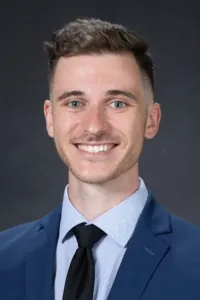
-
School
University of Arizona College of Medicine – Phoenix
Career goals
“My fascination with the brain began in high school with my younger sister’s traumatic brain injury and continued through my master’s degree when I watched my grandfather struggle with Alzheimer’s. While working at Nationwide Children’s Hospital and The Ohio State University before matriculating to medical school, I became inspired by the time I spent working with children receiving gene therapy for neuromuscular disorders, as well as the time I spent in the research lab using stem cells to model neurodegenerative and developmental conditions such as epilepsy. Seeing the synergistic impact that scientists could make in the lab and that the physicians and healthcare team could make clinically made me incredibly excited about becoming a physician-scientist within the field of child neurology. As an MD/PhD student at the University of Arizona College of Medicine – Phoenix, I am thrilled to continue pursuing these dreams of mine. No matter which specialty involving the brain I end up deciding to enter following medical school, I hope to blend my time as a scientist and physician both during and beyond residency. I would love to lead a translational research lab to better understand neurological disorders where our questions and focuses are framed by the patients whom I would be incredibly privileged to take care of as a doctor.”